
Whether you manage a commercial office building, a school, a multifamily property, or a single-family home, the environmental conditions inside your building do not happen by accident. Indoor environmental quality (IEQ) is shaped every day by how well the building itself is maintained. Gaps in the envelope, neglected HVAC systems, slow moisture infiltration, and deferred repairs do not just create structural problems. They create the conditions where mold grows, air quality declines, pests move in, and occupants get sick.
Preventive building maintenance is the most practical tool available to building owners, facility managers, and property teams who want to protect the health of the people inside. This post explains the connection between proactive maintenance and IEQ, the environmental problems deferred maintenance causes, and what a preventive approach looks like across different building types.
What Is Indoor Environmental Quality and Why Does It Matter?
Indoor environmental quality refers to the conditions inside a building that affect the health, comfort, and productivity of its occupants. IEQ encompasses air quality, moisture levels, temperature, ventilation, lighting, and the presence of contaminants like mold, asbestos, lead, VOCs, and biological hazards.
The U.S. Environmental Protection Agency has consistently found that indoor air can be two to five times more polluted than outdoor air, even in urban environments. Most people spend the majority of their time indoors, which makes the quality of that environment a direct public health concern.
IEQ problems rarely appear out of nowhere. In the vast majority of cases, they develop gradually from maintenance failures: a roof leak that goes unaddressed, an HVAC filter that is never changed, a crawlspace that stays damp, a door threshold that lets moisture in. Preventing those failures is the most reliable way to maintain a healthy indoor environment.
How Deferred Maintenance Creates Environmental Problems
Building systems are interconnected. A problem in one area almost always creates secondary problems in another. Here is how common maintenance gaps translate into environmental hazards across residential and commercial building types.
Moisture Intrusion and Mold Growth
Mold requires two things to grow: a food source (any organic material) and moisture. Buildings provide the food source readily. Maintenance determines whether moisture is controlled. Roof leaks, failed caulking around windows and doors, clogged gutters, poor site drainage, and unventilated crawlspaces all allow water to enter the building envelope or collect where it should not.
Once moisture is present, mold can establish itself within 24 to 48 hours. In commercial buildings, a slow leak inside a wall cavity or above a drop ceiling can go undetected for months, creating conditions for widespread mold colonization. In schools, mold in HVAC ducts or on ceiling tiles can affect entire wings of a building. In homes, a crawlspace with inadequate vapor barrier can introduce mold spores into the living area through stack effect air movement.
Preventing mold means preventing moisture. That means regular inspection and maintenance of the roof, gutters, flashing, caulking, crawlspace conditions, plumbing, and HVAC drainage systems.
HVAC Neglect and Indoor Air Quality
The HVAC system is the lungs of any building. When it is maintained properly, it filters particulates, controls humidity, dilutes indoor pollutants with fresh air, and distributes conditioned air evenly. When maintenance is deferred, it does the opposite.
Dirty or clogged filters restrict airflow and allow particulates to bypass filtration. Coils that are not cleaned accumulate biological growth. Ductwork that is not inspected may have leaks, disconnections, or contamination. In commercial buildings, inadequate fresh air exchange allows CO2 and VOC levels to climb, leading to the symptoms occupants describe as sick building syndrome: headaches, fatigue, difficulty concentrating, and respiratory irritation.
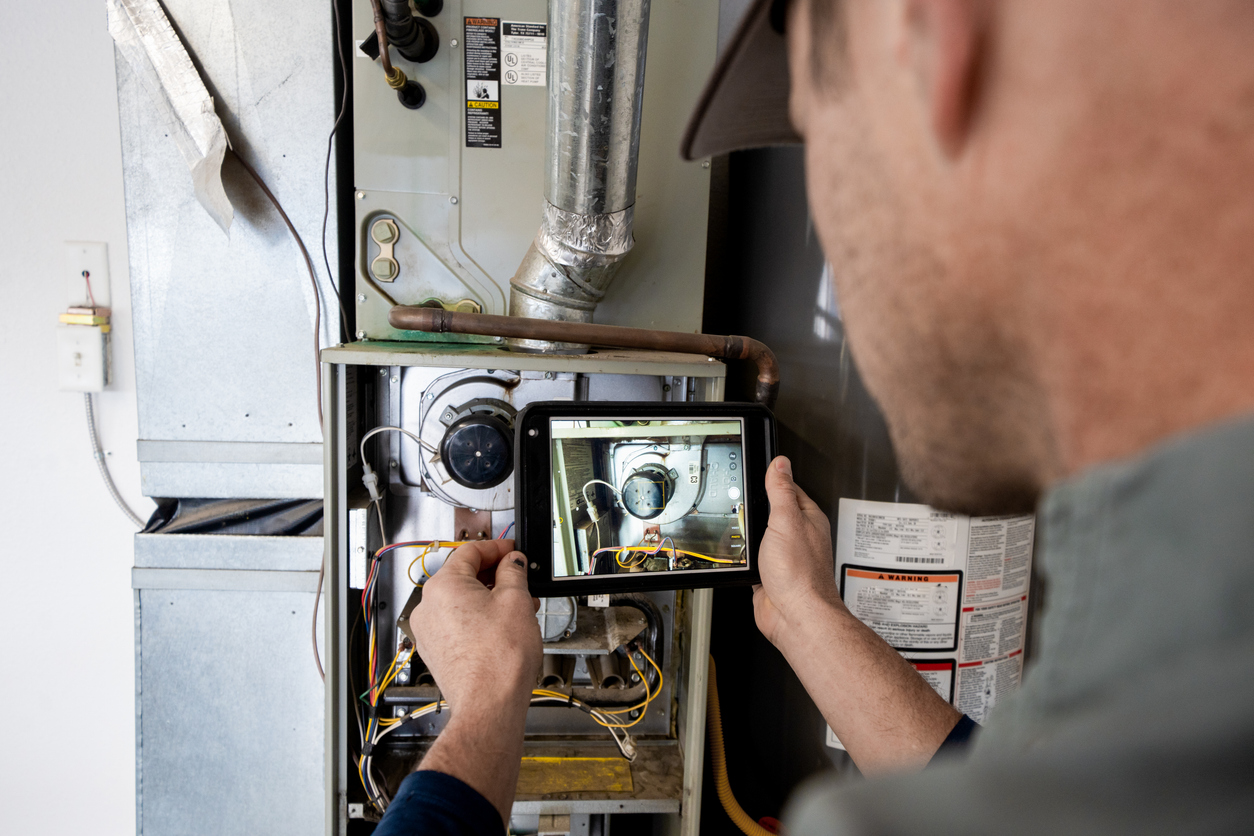
Routine HVAC maintenance, including filter replacement on schedule, coil cleaning, duct inspection, damper and ventilation rate checks, and condensate drain clearing, is one of the highest-leverage preventive actions any building owner can take for IEQ.
Pest Entry and Biological Hazards
Rodents and insects do not simply appear inside buildings. They enter through gaps, cracks, and openings that a maintained building envelope would not have. Missing weatherstripping, deteriorating door sweeps, unscreened vents, gaps around utility penetrations, and cracks in foundation walls are common entry points.
The environmental consequences extend beyond the pests themselves. Rodent infestations leave droppings and dander that contaminate air and surfaces and can transmit disease. Cockroach debris is a significant asthma trigger, particularly in multifamily residential and school buildings. Termite and carpenter ant damage, if undetected, compromises structural integrity and can expose treated wood materials that release VOCs when disturbed.
Sealing the building envelope, maintaining weatherstripping and door hardware, screening mechanical vents, and addressing moisture (which attracts pests independently) are all preventive maintenance tasks that reduce biological hazard risk.
Water Quality and Plumbing System Neglect
In older commercial and residential buildings, plumbing systems that are not maintained can introduce lead, sediment, bacteria, and other contaminants into the water supply. Lead pipe joints and fixtures, common in buildings constructed before the 1980s, can leach lead into drinking water when water chemistry changes or flow rates drop.
Stagnant water in infrequently used lines can allow Legionella bacteria to proliferate, a significant concern in hotels, hospitals, office buildings, and multifamily properties with large plumbing systems. Regular flushing protocols, water heater maintenance, and temperature management are critical preventive steps.
Filtration systems that are not maintained on schedule can become a contamination source themselves, introducing bacteria or reducing filtration efficiency below design capacity.
Preventive Maintenance Across Building Types
The IEQ risks from deferred maintenance are present in every building type, but the specific failure modes and their consequences differ by occupancy and use.
| Building Type | Key Maintenance Areas | Primary IEQ Risks if Neglected |
|---|---|---|
| Commercial / Office | HVAC, ventilation rates, restroom plumbing, building envelope, lighting controls | VOC buildup, CO2 accumulation, mold from roof leaks, Legionella in water systems |
| Schools and Daycares | HVAC, roof, moisture control, pest exclusion, restrooms | Mold, asthma triggers, lead in older plumbing, pesticide drift, poor ventilation |
| Multifamily Residential | Common area HVAC, unit exhaust fans, plumbing, exterior envelope, crawlspaces | Mold between units, pest harboring, lead pipe leaching, combustion gas buildup |
| Medical / Lab / Industrial | Specialized ventilation, HEPA filtration, chemical storage, drainage | Airborne contaminant exposure, cross-contamination, Legionella, silica or VOC exposure |
| Single-Family Homes | Roof, gutters, crawlspace, HVAC filters, plumbing, weatherstripping | Mold, radon, lead, pest entry, combustion gases, poor air filtration |
What a Proactive IEQ Maintenance Program Looks Like
A building that is managed proactively for IEQ does not wait for occupants to report symptoms or for a problem to become visible. It operates from a documented maintenance schedule that is tied to the known failure patterns of each system and the specific risk profile of the building.
A proactive program typically includes:
- Scheduled HVAC service on a defined interval, including filter replacement, coil cleaning, duct inspection, and ventilation rate verification
- Regular roof, gutter, and drainage inspections to identify moisture pathways before water enters the structure
- Building envelope checks covering caulking, weatherstripping, flashing, door and window seals, and foundation penetrations
- Crawlspace and basement monitoring for moisture, vapor barrier condition, and signs of biological growth
- Water system maintenance including heater flushing, filter cartridge replacement, and in commercial buildings, a written water management plan addressing Legionella risk
- Pest exclusion inspections focusing on entry points rather than chemical treatment after the fact
- Documentation of every visit, with photos and clear records of what was inspected, what was found, and what was completed
For commercial buildings, proactive maintenance also means coordination with licensed trades for permitted work, compliance with applicable codes, and in some cases regulatory documentation for OSHA, LEED, or tenant requirements.
When Testing Should Follow Maintenance
Preventive maintenance reduces the likelihood of environmental problems, but it does not eliminate the need for testing entirely. There are situations where environmental testing is the appropriate next step, even in a well-maintained building.
Testing is warranted when:
- Occupants report persistent symptoms that do not resolve with normal maintenance steps
- A building has a history of water intrusion or visible mold that has been remediated
- A purchase or sale is pending and due diligence requires baseline IEQ data
- Renovation work is planned in a building with older materials that may contain asbestos, lead paint, or other hazards
- A commercial building is pursuing LEED certification or needs IAQ verification for tenant requirements
- Regulatory compliance requires documentation, such as OSHA silica testing during construction activities
In these cases, the combination of a well-maintained building and professional environmental testing gives building owners and facility managers the clearest possible picture of actual conditions.
How Healthy Building Science Supports Proactive Building Care
Healthy Building Science provides industrial hygiene, environmental testing, healthy building inspections, and specialty general contracting for all building types across the San Francisco Bay Area and Northern California. The company’s unique position is the combination of environmental science expertise with hands-on construction knowledge, which means the team can both identify IEQ problems accurately and help resolve them.
For building owners and facility managers thinking about preventive care, Healthy Building Science can:
- Conduct a healthy building inspection to establish baseline IEQ conditions and identify maintenance gaps that create environmental risk
- Test for specific contaminants including mold, asbestos, lead, VOCs, formaldehyde, air quality, water quality, and EMF
- Provide industrial hygiene services for commercial, institutional, medical, and manufacturing facilities
- Perform specialty general contracting work for environmental upgrades including drainage systems, vapor barriers, ventilation improvements, air and water filtration, and dry rot repair
- Offer clearance testing after remediation to confirm that IEQ problems have been fully resolved
The goal is not to replace a building’s routine maintenance program but to complement it. Environmental testing and inspections are most valuable when they are part of a broader commitment to building care, not a reactive response after something has already gone wrong.
To schedule a healthy building inspection or discuss your building’s IEQ needs, contact Healthy Building Science at (415) 785-7986 or request a free quote.
Frequently Asked Questions
What does preventive building maintenance have to do with indoor air quality?
Most indoor air quality problems trace back to maintenance failures. Mold grows where maintenance allowed moisture to accumulate. Particulate levels rise when HVAC filters are not changed on schedule. VOC levels increase when ventilation rates are not maintained. Taking care of the building’s systems and envelope is the most direct way to protect air quality for occupants.
Yes. The principles are the same across all building types, though the scale, systems, and regulatory requirements differ. Commercial office buildings, schools, multifamily residential properties, medical facilities, and industrial buildings all benefit from structured preventive maintenance tied to IEQ outcomes. In many cases the consequences of deferred maintenance are larger in commercial buildings because more occupants are affected.
Mold requires moisture to grow. Building maintenance controls moisture by keeping roofs, gutters, drainage, plumbing, and the building envelope in good condition. When any of those systems fails and allows water to accumulate inside the structure, mold conditions develop quickly. Preventive maintenance addresses moisture pathways before mold has the chance to take hold.
Routine maintenance and environmental testing serve different purposes. Maintenance prevents problems from developing. Testing measures actual conditions and identifies contaminants that may be present despite maintenance efforts. Testing is most appropriate when occupants report health symptoms, when water damage or mold is suspected, before and after renovation work, or when regulatory compliance requires documentation.
Healthy Building Science provides environmental testing, industrial hygiene services, healthy building inspections, and specialty contracting for all building types including commercial, retail, institutional, medical, laboratory, manufacturing, multifamily residential, and single-family homes across the San Francisco Bay Area and Northern California.
